
Shetland Sheep Library
at Harmony Farms
Whispers of Wind and Sea: The Enchanted World of Shetland Folklore
Myths, Magic, and the Island Imagination Shaping Shetland's Cultural Soul
David Campbell
share this article:
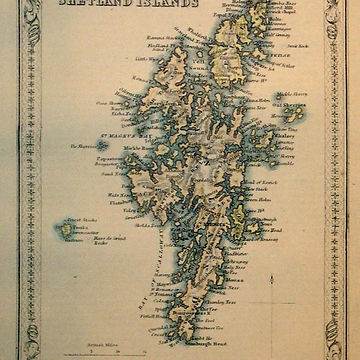
Shetland, a remote archipelago lying between Scotland and Norway, is a land shaped as much by story as by sea and stone. Its landscape is a tapestry of moorlands, rugged coastlines, and wind-swept hills, but its true richness lies in the oral traditions passed down through generations. In Shetland folklore, myth and memory are tightly woven, giving voice to a culture deeply connected to both the natural and the supernatural world.
Shetland, a remote archipelago lying between Scotland and Norway, is a land shaped as much by story as by sea and stone. Its landscape is a tapestry of moorlands, rugged coastlines, and wind-swept hills, but its true richness lies in the oral traditions passed down through generations. In Shetland folklore, myth and memory are tightly woven, giving voice to a culture deeply connected to both the natural and the supernatural world.
The influence of Norse mythology runs deep in Shetland’s folklore, a legacy of the islands’ long history under Scandinavian rule. Place names, language traces, and story structures all carry echoes of Viking heritage. Yet, Shetland’s myths are not mere Norse imports—they are island-grown, adapted to the rhythms of local life and the mysteries of an unforgiving environment. This fusion has created a unique folklore populated with creatures and tales unlike any other in the British Isles.
Among the most enduring figures in Shetlandic myth are the selkies—seal people who slip out of their skins to walk on land as humans. These beings often feature in tragic tales of love and loss. In many stories, a human man steals a selkie’s skin, forcing her to become his wife. Though she may bear him children and live with him for years, she never truly belongs to the land. The moment she finds her skin again, she returns to the sea, leaving her family behind. These stories reflect not only a deep reverence for the sea but also an understanding of the pain of separation—something familiar in an island community where loved ones often leave and do not return.
Equally haunting are the tales of the trows, small, troll-like creatures who dwell in earthen mounds and cause mischief under the cover of darkness. Trows are shy of daylight but bold at night, and are often blamed for illness, accidents, and strange happenings. They are said to steal human children, replacing them with changelings, and to sneak into homes to listen to music or steal food. Though mischievous, trows are not uniformly evil—they are simply creatures of their own rules and realms. To protect oneself from their interference, people would leave offerings or avoid certain behaviors, particularly during the long dark nights of winter when the veil between worlds was thought to be thin.
Ghost stories also feature prominently in Shetland’s mythic tradition. Apparitions of drowned sailors, phantom boats, and omens of death are common themes. The nyuggle, a water horse that lures riders to a watery grave, represents the sea’s dual nature as both life-giver and destroyer. Many of these stories served a practical purpose: they warned children to stay away from dangerous waters or taught respect for the power of nature.
Shetland’s myths also encode ancient understandings of weather, land, and time. Wind was once believed to be tied in knots and sold by witches to sailors, who could untie them to summon breezes. The aurora borealis was sometimes interpreted as spirits dancing in the sky. And certain stones, places, or plants were thought to carry protection or power, reminders that the land itself was animate and sacred.
What makes Shetland’s folklore particularly powerful is the way it continues to live in the present. Though many no longer believe in selkies or trows as literal beings, the stories remain—told in homes, taught in schools, and celebrated through festivals and art. They are vessels for memory, rooted in real landscapes and experiences, shaped by a people who have always lived close to nature and the unknown.
In the quiet hills and wave-lashed cliffs of Shetland, one can still feel the pulse of these ancient tales. They are more than relics of the past—they are the soul of the islands, whispered on the wind, carried in the tide, and forever part of the Shetland way of seeing the world.